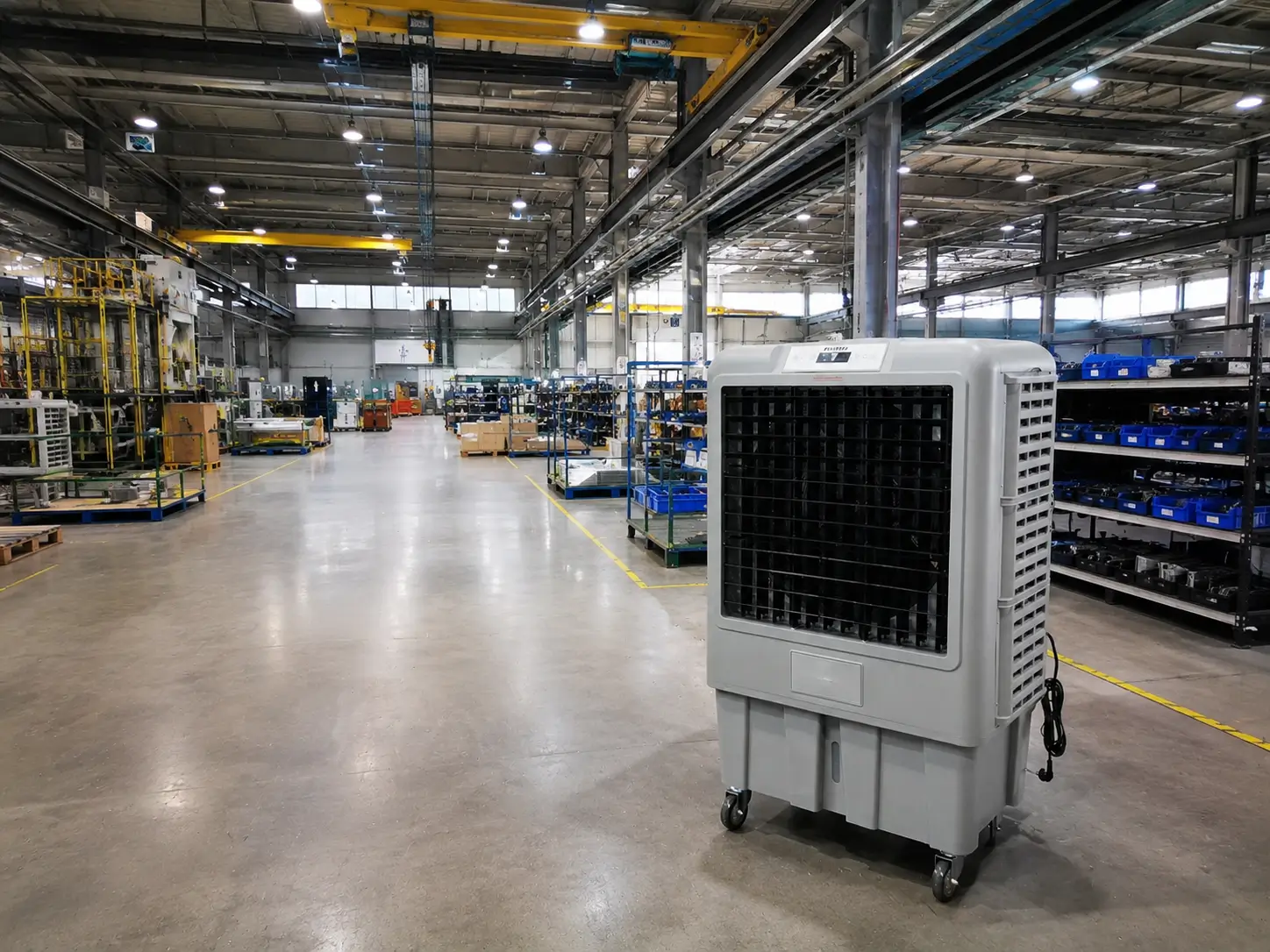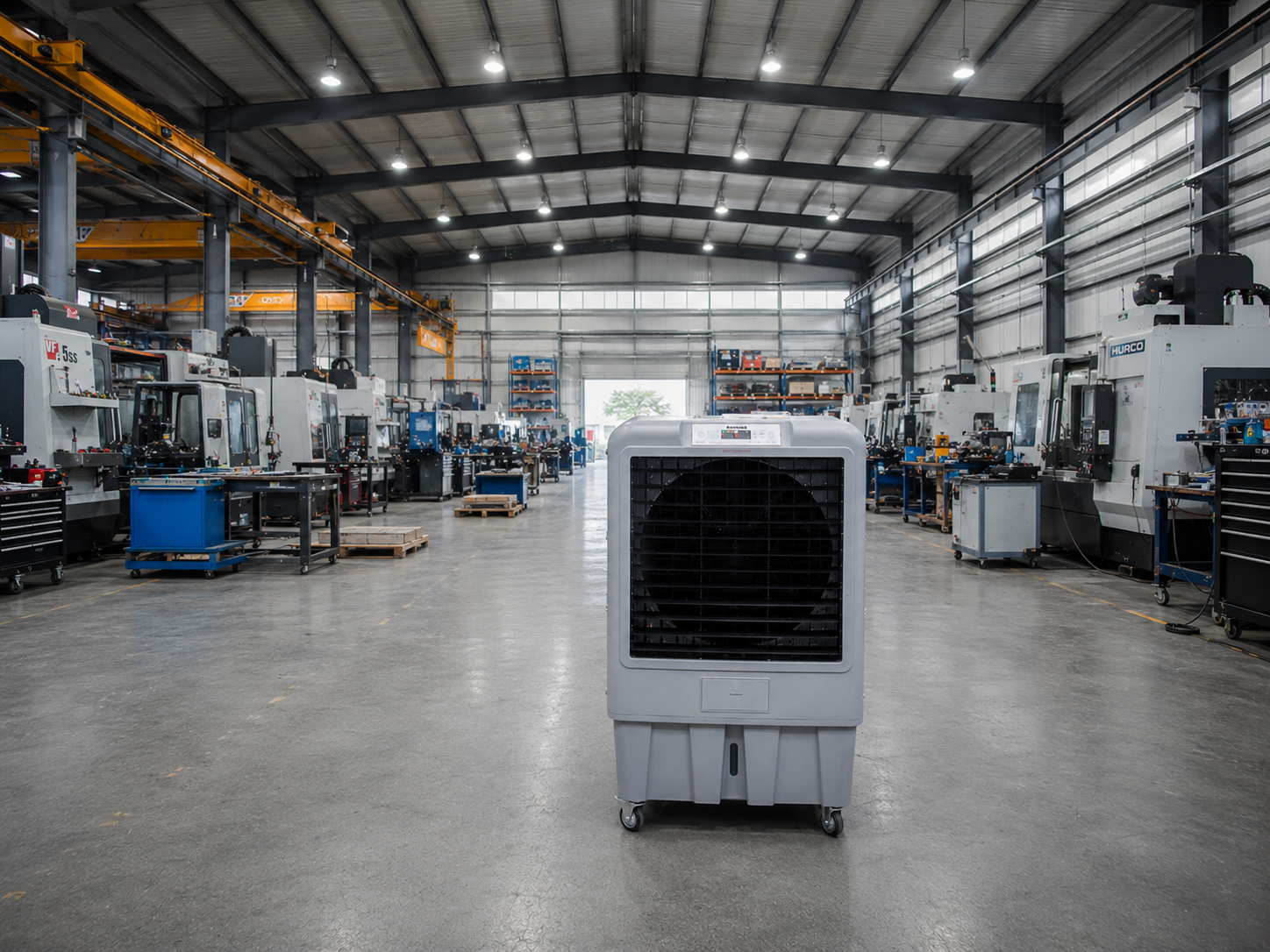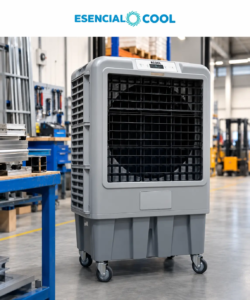
In an industrial warehouse or workshop, an evaporative cooler operates for months at a time, continuously circulating air and water. When temperatures drop and the unit is no longer switched on every morning, it’s time to spend an hour preparing it for storage. What you do now can determine whether it starts up smoothly in May or whether the first hot day brings unpleasant odours, reduced airflow and a breakdown.
This guide provides general recommendations for portable industrial evaporative coolers. If your model’s manual specifies different procedures, always follow the manufacturer’s instructions.
1. Check the pump, water distributor and grilles (with water in the tank)
Before emptying the tank, while it still contains water, run the unit for a few minutes and check the components that depend on water circulation:
- Make sure the pump starts and the water distributor spreads water evenly across the entire width of the cooling pad. A dry section of the pad may indicate that one of the distributor openings is blocked by limescale.
- Clean the outlet grilles and louvres with a damp cloth, making sure the unit is switched off and disconnected from the power supply.
2. Empty the water tank completely
Once you have checked the water circulation, switch off the unit and unplug it. Turn off the water supply if the cooler is connected to the mains water system, open the drain and allow the tank to empty completely. Storing an evaporative cooler with water remaining in the tank is a common cause of unpleasant odours and mineral deposits when the unit is used again.
If you live in a hard-water area, take the opportunity to remove any limescale that has accumulated on the bottom and sides of the tank. Use a descaling product suitable for the materials of the unit and rinse thoroughly afterwards.
3. Clean the evaporative cooling pads
The cooling pads (also known as cellulose pads) are at the heart of the unit: all the air passes through them. Remove them according to the manufacturer’s instructions, wash away dust using low-pressure water in the opposite direction to the airflow, and allow them to dry completely in the shade before reinstalling them. Do not use high-pressure water or stiff brushes, as these can damage the structure of the pads.
If a pad is deformed, has areas hardened by limescale or retains a persistent unpleasant smell, it’s time to replace it rather than waiting until May.
4. Run the fan without water
With the tank empty and the cooling pads clean and dry, switch the unit to ventilation-only mode (without activating the water pump) for 30 to 40 minutes, provided the manufacturer permits operation without water. This helps remove any residual moisture from the interior before storage.
5. Check the wheels and power cable, and store the unit upright, dry and protected
- Check the condition of the wheels and brakes, as the unit is often moved around during the operating season.
- Inspect the power cable and plug. If you notice cracks or signs of overheating, arrange for the affected components to be replaced before using the unit again.
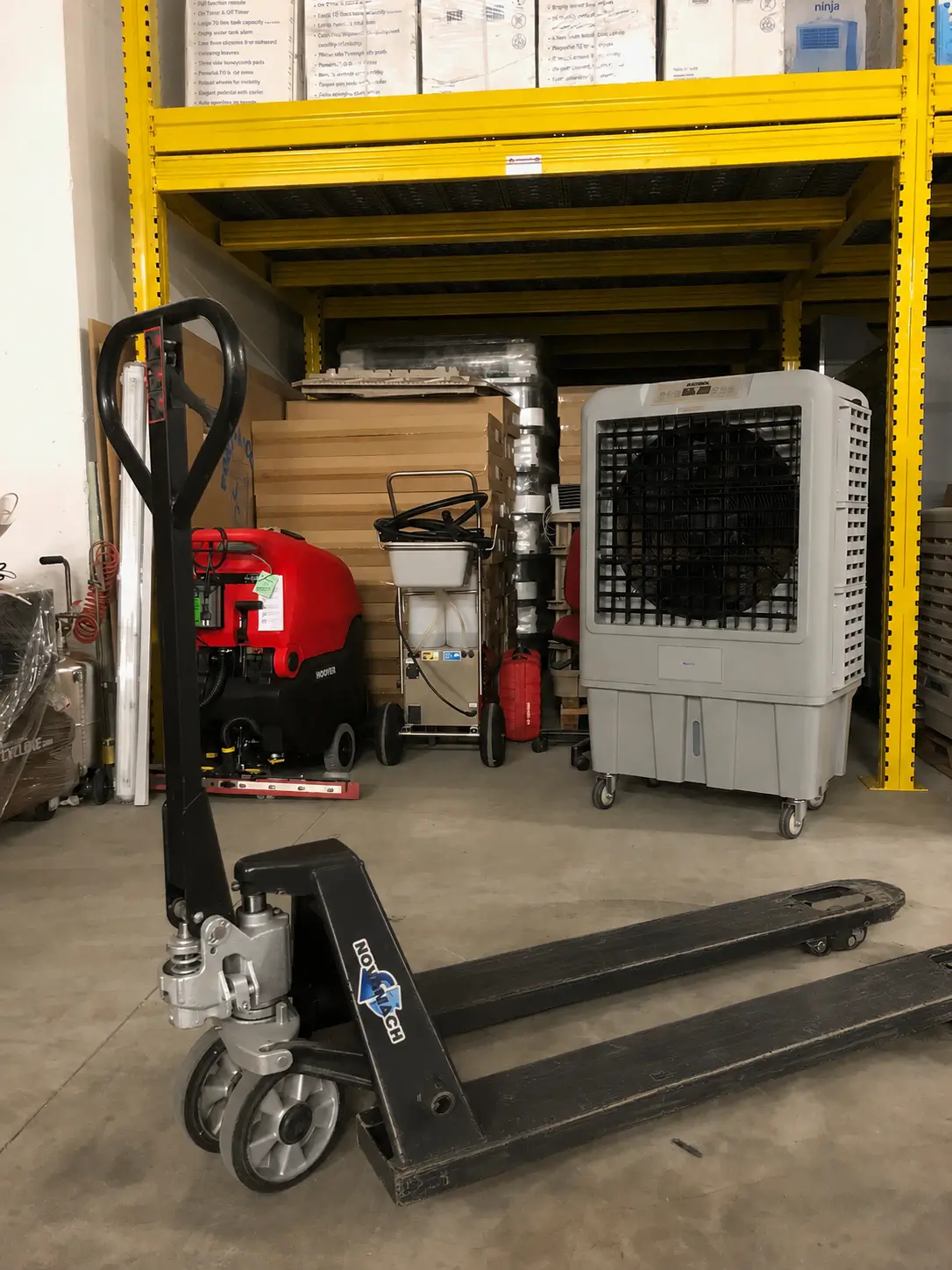
Store the evaporative cooler in a dry area of the warehouse, in an upright position, with the water tank empty and the drain open if recommended by the manufacturer. Cover it with a breathable protective cover to prevent dust from accumulating on the cooling pads and fan. Keep the remote control and accessories together with the unit.
6. Before next summer
When you are ready to use the unit again, inspect the cooling pads, fill the water tank, test the pump and check that the water is distributed evenly. Run the cooler for a while before the first hot day. If the airflow is lower than the previous year, you notice unpleasant odours or hear an unusual noise, investigate the problem immediately rather than waiting until a heatwave when the warehouse reaches 35°C.
What if the warehouse is still hot?
If your industrial activity generates heat or the warehouse remains warm, there is no problem with continuing to use the evaporative cooler for as long as necessary. Just remember that evaporative cooling works best with a continuous supply of fresh air. Keeping doors and windows closed reduces efficiency and increases humidity. When you finally stop using the unit, return to step 1.

Contact us! We’ll be happy to help you.
Visit our website: www.esencialcool.com
Call us/WhatsApp: +34 633 938 824
Email us: sales@esencialcool.com